Symptom complexes
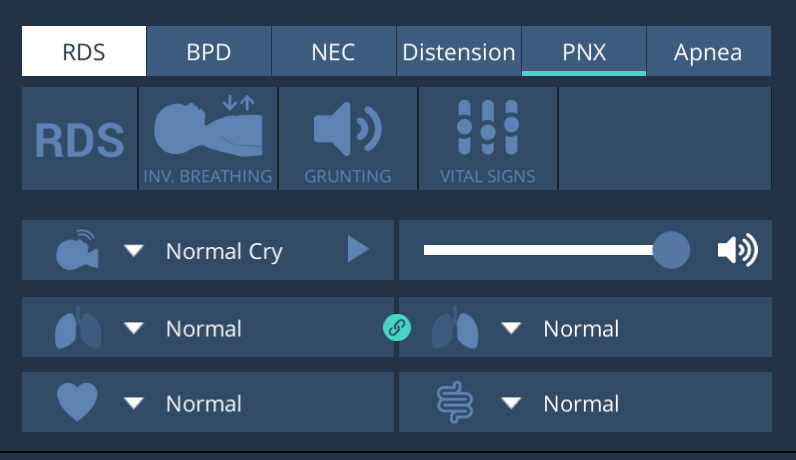
Paul does not include pre-programmed scenarios. Instead, it provides pre-programmed Symptom Complexes accessible from the upper-middle area of the GUI.
|
|
Respiratory Distress Syndrome (RDS)
RDS complexe symptoms include: paradoxical (seesaw) chest and abdominal movements, subcostal retractions, and abnormal respiratory sounds (grunting, wheezing).
 | Clicking the "RDS" button activates all symptoms simultaneously. Additionally, lung compliance automatically decreases to approximately 75% of the maximum value. |
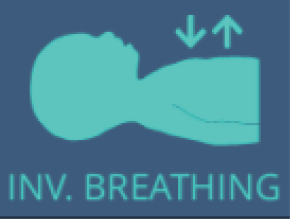 | When Seesaw breathing is enabled, either directly or via the RDS complex, spontaneous breathing switches to a paradoxical pattern: during inspiration, the chest moves inward while the abdomen moves outward. This also produces visible subcostal retractions. The seesaw pattern is visualized in the Paul 3D model. |
 | When Grunting is enabled, characteristic RDS sounds are played through Paul. The sound is heard during expiration and adapts to the current respiratory rate. When the breathing rate is changed, the grunting tempo changes accordingly. |
 | When you activate RDS via the main RDS button, the simulator's vital signs adjust automatically. If you prefer to set your own vital signs, enable Seesaw breathing and Grunting individually without activating the main RDS button. |
Bronchopulmonary Dysplasia (BPD)
Bronchopulmonary Dysplasia is a chronic lung disease, often after prolonged mechanical ventilation, characterized by tachypnea, increased work of breathing, and fluctuations in oxygen saturation.
 | The BPD complex includes increased respiratory effort, a decrease in oxygen saturation, and an automatic reduction of lung compliance to 85% of baseline. Individual symptom buttons allow each symptom to be selected separately for both RDS and BPD. |
| When Seesaw breathing is enabled, either directly or via the BPD complex, spontaneous breathing switches to a paradoxical pattern, but less pronounced than in RDS. Lung compliance is set to 85%. |
| Vital SIGNs When BPD is activated via the main BPD button, Paul’s vital signs adjust automatically: tachypnea occurs and peripheral oxygen saturation decreases. To set custom vital signs, enable Seesaw breathing individually without activating the main BPD button. |
Necrotizing Enterocolitis (NEC)
Necrotizing enterocolitis is a severe intestinal disease of preterm infants, characterized by mucosal and transmural necrosis. It is the most common gastrointestinal emergency in premature and newborn infants.
Typical clinical symptoms include lethargy, temperature instability, signs of ileus, abdominal distension, sometimes livid abdominal discoloration, bilious vomiting, bloody stools, apnea, and general signs of sepsis.
Diagnosis is established clinically and radiologically.
 | Clicking the NEC button activates all symptoms simultaneously. Upon activation, the abdomen protrudes, livid discolorations appear, and vital signs adjust automatically. |
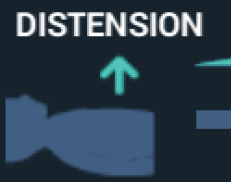 | When activated via the NEC button, the abdomen elevates automatically. In manual mode, the intensity of abdominal elevation can be adjusted with the slider. The distended abdomen is also visualized in the Paul 3D model on the GUI. NOTEDistension elevates the abdomen only, without additional NEC signs (like skin discoloration). A distended abdomen is common in preterm infants and may indicate feeding intolerance or gastric distension during non-invasive ventilation (CPAP) or mask ventilation. |
 | When "Discoloration" is activated, several livid discolorations appear over Paul‘s abdomen. In manual mode, the intensity of these discolourations can also be changed. |
 | When the NEC button is activated, the simulator's vital signs adjust automatically: oxygen saturation decreases, tachycardia occurs, and lung compliance is reduced. To retain custom vital signs (and compliance), activate Distension and Discoloration individually without using the main NEC button. |
Abdominal distension
The Distension symptom complex solely involves distension of the abdomen without additional NEC signs (e.g., skin discoloration). A distended abdomen is a very common symptom in premature infants and can indicate difficulties with feeding as well as signs of gastric distension during non-invasive ventilation (CPAP) or mask ventilation.
 | The "AUTO Distension" mode also allows for automatic filling of the stomach with air during inadequate mask ventilation and automatic reduction of compliance, compressing the lungs due to increased intra-abdominal pressure. NOTEThe slider can be used to manually regulate the intensity of the abdominal distension and simulate a distended abdomen. | |
  | When AUTO Distension is enabled, head hyperextension during ventilation leads to gradual gastric air filling. This process is visible on Paul and in the GUI. As the stomach fills, the abdomen progressively distends, and lung compliance decreases with each inadequate ventilation. Distension continues until a maximum level is reached. After gastric suctioning, the stomach can be manually deflated using the Deflate button. |
Other symptoms
In addition to the symptoms complexe, users can control other symptoms like the crying, lung compliance, heartbeat and bowel sounds
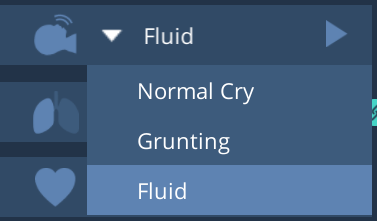 | These are the vocal sounds that can be heard directly from the simulator:
|
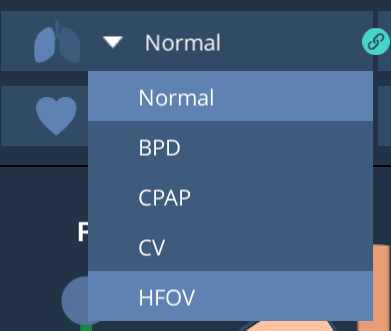 | These are the lung sounds that can be heard through the stethoscope:
|
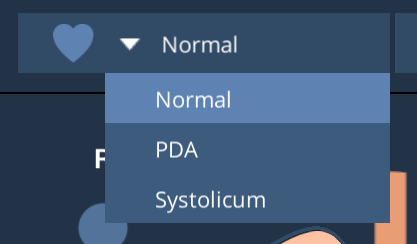 | These are the abdominal sounds that can be heard:
|
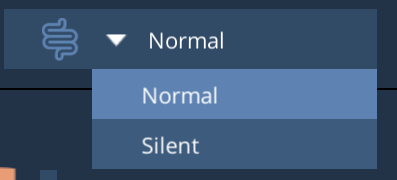 | These are the bowel sounds that can be heard:
|