Symptom complexes
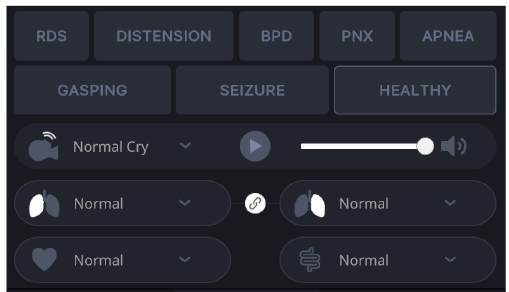
Emma/Emily does not include pre-programmed scenarios. Instead, it provides pre-programmed Symptom Complexes accessible from the upper-middle area of the GUI.
|
|
Respiratory Distress Syndrome (RDS)
RDS complexe symptoms include: paradoxical (seesaw) chest and abdominal movements, subcostal retractions, and abnormal respiratory sounds (grunting, wheezing).
 | Clicking the "RDS" button activates all symptoms simultaneously. Additionally, lung compliance automatically decreases to approximately 75% of the maximum value. |
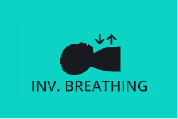 | When Seesaw breathing is enabled, either directly or via the RDS complex, spontaneous breathing switches to a paradoxical pattern: during inspiration, the chest moves inward while the abdomen moves outward. This also produces visible subcostal retractions. The seesaw pattern is visualized in the Emma/Emily 3D model. |
 | When Grunting is enabled, characteristic RDS sounds are played through Emma/Emily. The sound is heard during expiration and adapts to the current respiratory rate. When the breathing rate is changed, the grunting tempo changes accordingly. |
 | When you activate RDS via the main RDS button, the simulator's vital signs adjust automatically. If you prefer to set your own vital signs, enable Seesaw breathing and Grunting individually without activating the main RDS button. |
Bronchopulmonary Dysplasia (BPD)
Bronchopulmonary Dysplasia is a chronic lung disease, often after prolonged mechanical ventilation, characterized by tachypnea, increased work of breathing, and fluctuations in oxygen saturation.
 | The BPD complex includes increased respiratory effort, a decrease in oxygen saturation, and an automatic reduction of lung compliance to 85% of baseline. Individual symptom buttons allow each symptom to be selected separately for both RDS and BPD. |
| When Seesaw breathing is enabled, either directly or via the BPD complex, spontaneous breathing switches to a paradoxical pattern, but less pronounced than in RDS. Lung compliance is set to 85%. |
| Vital SIGNs When BPD is activated via the main BPD button, Emma/Emily’s vital signs adjust automatically: tachypnea occurs and peripheral oxygen saturation decreases. To set custom vital signs, enable Seesaw breathing individually without activating the main BPD button. |
Abdominal distension
A distended abdomen is a very common symptom in newborns and may indicate feeding difficulties as well as signs of gastric distension during non-invasive ventilation (CPAP) or mask ventilation. It can also be a sign of an acute abdomen, requiring immediate diagnostic evaluation (ultrasound, X-ray) and, if necessary, emergency treatment.
By activating the “Distension Button”, a distended abdomen can be simulated on Emily. The intensity control allows the degree of distension to be adjusted. Compliance can also be manually modified as needed.
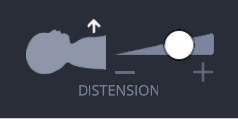   | The "AUTO Distension" mode also allows for automatic filling of the stomach with air during inadequate mask ventilation and automatic reduction of compliance, compressing the lungs due to increased intra-abdominal pressure. NOTEThe slider can be used to manually regulate the intensity of the abdominal distension and simulate a distended abdomen. |
  | When AUTO Distension is enabled, head hyperextension during ventilation leads to gradual gastric air filling. This process is visible on Emma/Emily and in the GUI. As the stomach fills, the abdomen progressively distends, and lung compliance decreases with each inadequate ventilation. Distension continues until a maximum level is reached. After gastric suctioning, the stomach can be manually deflated using the Deflate button. |
Gasping
Gasping is an abnormal, reflexive breathing pattern seen in severely compromised newborns. It is ineffective for oxygenation and indicates the need for immediate positive pressure ventilation.
Emily can simulate gasping to train recognition and prompt intervention in such critical situations. Activating the symptom complex button Gasping reduces Emily’s breathing rate to approximately 8 breaths per minute and decreases heart rate and oxygen saturation accordingly
| When Gasping is activated, either directly or via the Gasping menu, spontaneous breathing automatically switches to a gasping pattern at approximately 8 breaths per minute. |
| If all symptoms of Gasping are activated via the main Gasping button, Emily’s vital signs automatically adjust: SpO2 drops to 40%, heart rate decreases to 70 bpm, and spontaneous movements cease. If you wish to set your own vital signs, activate Gasping separately without using the main Gasping menu button. |
Seizures
Seizures in newborns are abnormal, uncontrolled bursts of electrical activity in the brain, often caused by conditions such as hypoxic-ischemic injury, metabolic disturbances, infections, or intracranial bleeding. They often present subtly, for example through fluctuations in oxygen saturation, and less commonly as rhythmic jerks or tonic posturing. Seizures indicate significant neurological compromise and require urgent evaluation and treatment.
Emma can simulate neonatal seizures to train recognition of both obvious and subtle signs, helping prepare teams to respond promptly and appropriately in real clinical situations
| When Seizures are activated, either individually or via the “Seizures” menu, Emily displays rhythmic, repetitive jerks (clonic seizure pattern). Spontaneous movements can be increased or decreased using the Movement slider. |
| If Seizures are activated via the main "Seizures" button, Emily‘s vital signs automatically change as well. SpO2drops to 88% and her heart rate increases to 140 bpm. |
Healthy baby
Clicking the Healthy baby button resets all simulator settings to the default values for a healthy newborn. Monitor settings, presets, and debriefing settings remain unchanged.