Features and skills
Airway and breathing
Dynamic left/right lung resistance
Asymmetrical chest rise
Lung aspiration with direct feedback
Chest compressions
Chest rise and fall
Head tilt, jaw thrust and chin lift
Airway complications
The following conditions can be simulated to challenge airway management and provide realistic training scenarios for learners:
Tongue edema
Contaminated airway (vomit simulation)
Pharyngeal swelling
Laryngospasm
Decreased cervical range of motion
Trismus
Can’t intubate/Can’t ventilate
Airway complications bulbs
Three bulbs attached to the manikin control the main airway complications:
1 | 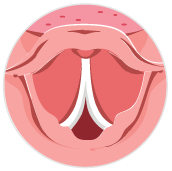 | By pumping the Laryngospasm bulb, users simulate tightening of the vocal cords, restricting airflow and making intubation more difficult. |
2 | 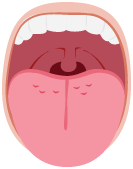 | By pumping the Tongue edema bulb, users increase tongue size, creating obstruction and challenging airway visualization and device placement. |
3 | 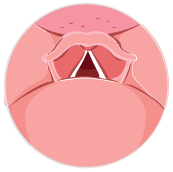 | By pumping the Pharyngeal swelling bulb, users simulate narrowing of the pharyngeal space, reducing airway patency and complicating ventilation and intubation |
More information on this procedure is available in this how-to video.
Chest rise control
The two blue sliders on the manikin control airflow to the left and right lungs, allowing simulation of symmetrical or asymmetrical chest rise:
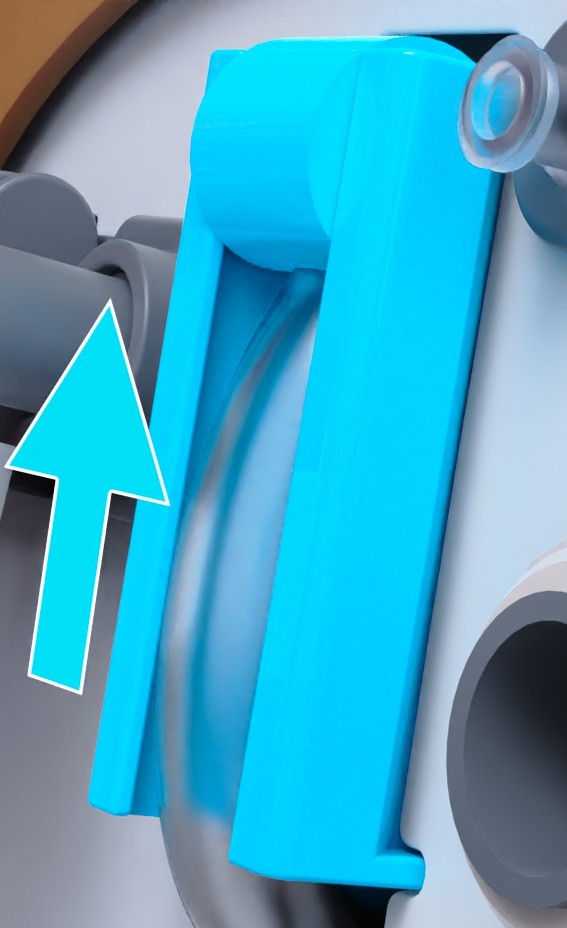 | When both sliders in the OPEN position (up), the air flows to both lungs, producing bilateral chest rise during ventilation. |
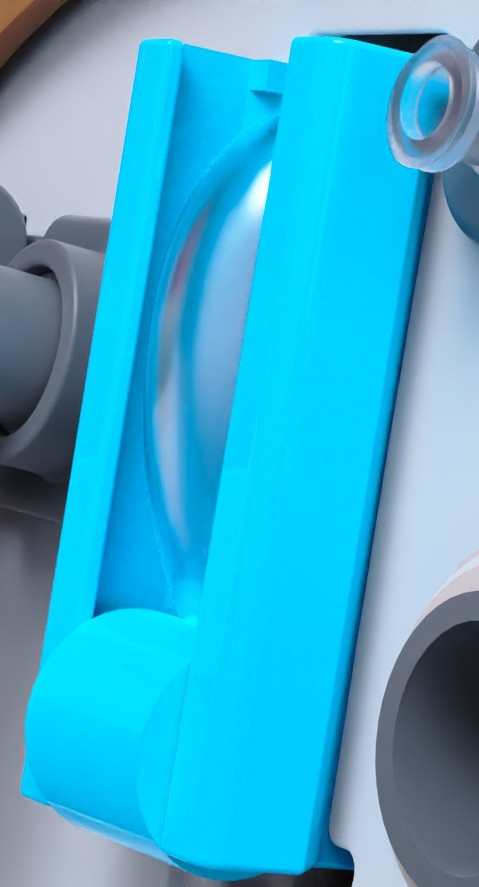 | When one slider is moved DOWN (closed), the airflow to that side is blocked, creating asymmetrical chest rise.
|